
 Add to Preferred Sources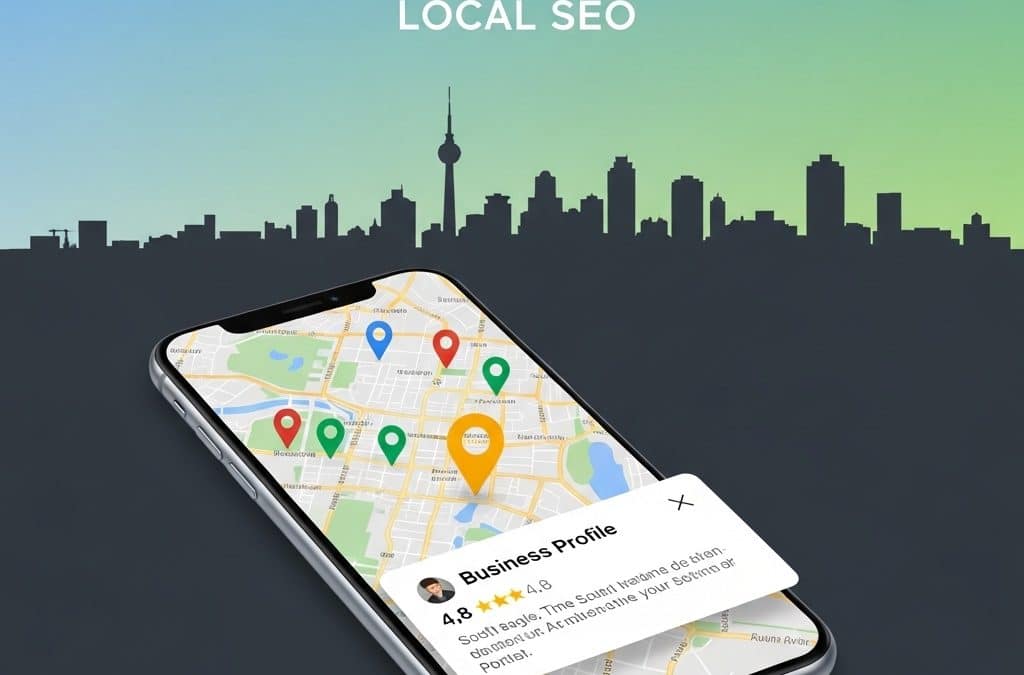
Local SEO South Africa businesses win with comes down to five jobs done properly — a complete Google Business Profile, consistent listings on South African directories, a steady flow of reviews, pages for the suburbs you serve, and a few local links — and most businesses that do all five reach the Google Map Pack for their main searches within about three to six months. Local search is often the fastest-return part of a wider SEO strategy for South African businesses, because the people searching are ready to call or visit. This guide is the step-by-step action plan; if you first want to understand the ranking mechanics, read how local SEO works in South Africa.
Want to know exactly what it will take to get your business into the Map Pack? We will check your profile and competitors free.
Get a Free Local SEO QuoteWhy the Map Pack Is Worth the Effort
The Map Pack — the three businesses Google shows with a map above the normal results — is the most valuable spot for any business that serves a local area, because it is where searchers with immediate intent click, call and ask for directions.
Google's own research found that 76% of people who search on a smartphone for something nearby visit a related business within a day. For a South African plumber, dentist, restaurant or retailer, that makes local search one of the shortest paths from online visibility to a paying customer. And unlike Google Ads, a Map Pack position costs nothing per click once you hold it.
Key Takeaway
Most South African businesses still have incomplete profiles, inconsistent listings and few reviews. That makes the Map Pack more winnable than it looks: a business that does the basics properly and keeps them up often overtakes older competitors that rely on word of mouth alone.
Step 1: Set Up Google Business Profile Properly
Your Google Business Profile is the single most important local ranking asset you control — it decides whether you are eligible for the Map Pack at all and what customers see before they reach your website.
| Profile field | What to do | Common South African mistake |
|---|---|---|
| Business name | Use your real trading name exactly as on your signage | Adding keywords such as "Best Plumber Joburg" — risks suspension |
| Primary category | Choose the most specific category that matches your main service | Picking a broad category like "Consultant" |
| Address or service area | Full street address with suburb, or service areas if you visit customers | City only, or a virtual office address |
| Phone and hours | A local number and hours that include public holidays | Hours never updated for holidays |
| Services and description | List every service; describe what you do and where in plain language | Empty services list |
| Photos | 10+ real photos of premises, team and work, added regularly | Only a logo or stock images |
Google's guidance on improving your local ranking confirms that complete, accurate and active profiles rank better — relevance, distance and prominence are the three factors it names.
Step 2: Build Consistent South African Citations
Citations are listings of your business name, address and phone number on other sites, and local search rewards businesses whose details are identical everywhere they appear.
Start with the directories South Africans actually use and the platforms that feed map apps: Brabys, Snupit, Cylex and Hotfrog, plus Bing Places and Apple Business Connect, and any industry association listing that applies to you. Use exactly the same name, address and number on each — "Unit 4, 12 Main Rd" on one site and "12 Main Road" on another looks like two different businesses. Ten accurate, relevant listings beat a hundred junk ones.
Step 3: Build a Steady Flow of Reviews
Reviews are one of the strongest prominence signals in local search, and what matters is a steady flow of genuine, recent reviews with replies — not a burst of 50 in one week.
A review system that works: send every happy customer a short WhatsApp or SMS message with your direct review link within a day of the job, reply to every review (good or bad) within 24 hours, and mention the service and suburb naturally in your replies.
What gets profiles penalised: buying reviews, offering discounts in exchange for five stars, or asking staff and family to review. Google removes them — and can suspend the profile.
Need a review-request system set up for your business? We can build it into your WhatsApp and email follow-ups — ask us how.
Get a Free Review System PlanStep 4: Add Pages for the Areas You Serve
Location pages tell Google which suburbs and towns you serve, and they work only when each page is genuinely useful for that area rather than a copy with the town name swapped.
A good suburb page includes the services you offer there, projects or customers you have served nearby, how quickly you can get there, local landmarks or context, and reviews from customers in that area. Build pages for the five to ten areas that matter most commercially, not for every suburb in Gauteng. For businesses that also want national visibility, keep these separate from your main service pages so they do not compete with each other.
Step 5: Earn a Few Local Links
Local links — from nearby suppliers, business chambers, community sites, sponsorships and local press — show Google that your business is known in its area, and a handful of relevant ones is worth more than dozens of unrelated links.
Practical sources include your local business chamber, suppliers and partners who list their stockists or installers, sports clubs or schools you sponsor, local news coverage of a project, and industry associations. None of these need a large budget; they need someone to ask.
Do All Five Together
A perfect profile with no reviews loses to a less complete profile with dozens of recent reviews and consistent listings. Local SEO South Africa rankings come from doing all five steps together and keeping them active — not from perfecting one.
Local SEO South Africa Costs and Your 90-Day Plan
Local SEO in South Africa costs nothing but time if you do it yourself, roughly R3,000–R8,000 a month for a freelancer or boutique provider, and R8,000–R15,000 a month for a full local programme across several locations.
| Period | Focus | What you should see |
|---|---|---|
| Days 1–30 | Profile completed, top 10 citations fixed, review system live | More profile views and calls from branded searches |
| Days 31–60 | Suburb pages for key areas, review flow of several a month | Movement into positions 4–10 on Maps for main terms |
| Days 61–90 | Local links, profile posts, photo updates | First Map Pack appearances for less competitive searches |
| Months 4–6 | Keep reviews, posts and links steady | Map Pack for main searches in most categories |
For national-level pricing and what a full retainer includes, see SEO pricing in South Africa.
Local Search Mistakes That Hold Businesses Back
The mistakes that most often keep South African businesses out of the Map Pack are avoidable: keyword-stuffed business names, inconsistent listings, duplicate profiles, ignored reviews and profiles left untouched for months.
Keyword-stuffed names: "Joe's Plumbing – Best Emergency Plumber Johannesburg" may lift rankings briefly, then gets the profile reported or suspended. Use your real trading name.
Duplicate profiles: an old profile from a previous address or a listing a former employee created splits your reviews and confuses Google. Find and merge or remove duplicates.
A website that contradicts the profile: different phone numbers, hours or addresses on your site and profile weaken trust. Keep the details identical everywhere.
A profile left idle: no new photos, posts or review replies for months signals a business that may have closed. Ten minutes a week keeps it active.
Consistency Is the Ranking Factor You Control
Local SEO South Africa results depend heavily on consistency — the same name, address and number everywhere, a steady flow of reviews and regular profile activity. None of it is complicated, but it has to be done every month, which is why businesses that keep at it overtake those that set up once and stop.
Want us to find and fix the listing and profile problems holding you back? We will send you the list free.
Get a Free Local Listing CheckHow to Measure Local Search Results Each Month
Local search results are best measured by the actions people take from your listing — calls, direction requests and website visits — rather than by where you rank on any single search, because Map Pack positions change with every searcher's location.
Someone searching "plumber" from Randburg sees a different Map Pack from someone searching the same word in Fourways ten kilometres away. A rank-checking tool that reports one position for "plumber Johannesburg" hides that. The numbers that reflect real business are sitting in two free tools you already have access to.
| Metric | Where to find it | What it tells you | Healthy direction |
|---|---|---|---|
| Calls from the profile | Google Business Profile → Performance | How many people phoned straight from search or Maps | Rising month on month |
| Direction requests | Google Business Profile → Performance | Intent to visit a physical location | Rising, with requests from the suburbs you serve |
| Website clicks | Google Business Profile → Performance | People who wanted more detail before deciding | Rising, matched by enquiries on the site |
| Searches that showed your profile | Google Business Profile → Performance | Which terms trigger your listing | More service terms, fewer brand-only terms |
| Suburb and "near me" queries | Search Console → Performance, filtered by query | Whether area pages are being found | Impressions growing for each suburb page |
Add a UTM tag to the website link on your profile (for example ?utm_source=google&utm_medium=organic&utm_campaign=gbp) so that visits from the listing show separately in Google Analytics instead of blending into general organic traffic. If phone calls matter most, note how new callers found you for a month — a simple tally on a notepad by the phone is enough to tell whether the profile or the website is doing the work.
Illustrative example: a Pretoria East physiotherapy practice sees profile calls rise from 38 to 61 over three months while its ranking tool shows "no change". The ranking tool was checking from a single central location; the calls show the listing now appears for searchers in Faerie Glen and Moreleta Park, where most of its patients live.
Handling More Than One Location or a Service Area
Businesses with several branches need one Google Business Profile per staffed location, while businesses that travel to customers should set a service area and hide their street address, because Google treats these two setups differently and mixing them causes listings to be suspended.
A few rules keep multi-location setups clean:
- One profile per real, staffed premises. A branch in Durban North and one in Umhlanga each get their own profile, phone number and opening hours. A virtual office or a shared co-working desk that nobody staffs does not qualify, and verification tends to fail or be reversed later.
- A matching page for each branch. Link each profile to its own branch page rather than the homepage. The branch page should carry that location's address, phone number, hours, a map and a few lines about the team or services specific to it.
- Service-area businesses list areas, not an address. Electricians, cleaners, mobile mechanics and similar businesses should list the suburbs or towns they cover and keep the home address hidden. Listing a home address you do not want customers visiting is one of the most common reasons listings get flagged.
- Keep names identical everywhere. "Smith & Co Attorneys – Sandton" on one directory and "Smith and Co Inc" on another weakens the signals that tie your citations together.
What to avoid: creating profiles for Sandton, Rosebank, Midrand and Centurion when you only have one office in Sandton. It may work for a few weeks, but duplicate or address-less listings are routinely removed, and a suspension can take the genuine profile down with them.
Replying to Reviews Without Creating New Problems
The best review reply is short, specific and written for the next customer reading it — thank the reviewer, mention what they used you for, and in the case of a complaint, acknowledge it and move the detail offline.
Replies are public and permanent, so they work as sales copy for everyone who reads your profile afterwards. A reply to a five-star review might read: "Thanks, Thandi — glad the geyser was sorted the same afternoon. We'll pass your note on to Sipho." That confirms the service, the speed and the area without sounding scripted.
Negative reviews need more care. Respond within a day or two, stay factual, and avoid arguing the details in public. Never confirm private information about the person — this matters for every business under POPIA, and especially for medical, legal and financial practices, where even confirming that someone is a client can be a problem. A reply such as "We're sorry this wasn't the experience you expected. Please contact our practice manager on 011 000 0000 so we can look into it properly" protects both sides.
Key takeaway: Review replies are read by future customers far more than by the original reviewer. Keep them short, specific and calm, never reveal private details, and treat every reply as a small public advert for how your business handles people.
How South Africans Search for Local Services
South Africans search for local services mostly on mobile, often using suburb names or "near me" rather than city names, which means your pages and profile need to match the way people in your area actually describe where they are.
Someone in Cape Town is more likely to type "dentist Claremont" or "dentist southern suburbs" than "dentist Cape Town". In Gauteng, people use suburb names (Bryanston, Bedfordview, Menlyn) and sometimes broader area names (East Rand, West Rand). Check the Search Console queries for your site and the "Searches" list in your profile — the words customers use there should shape your area pages and your profile description.
Mobile behaviour also changes what matters on the page. Tap-to-call buttons, a WhatsApp link, clear hours, and a page that loads quickly on a mid-range phone over mobile data will convert more visitors than long blocks of text. If you have not checked your site against Google's page experience measures recently, the steps in our SEO audit guide cover how to do that.
How Growth Pulse Media Runs Local SEO
Growth Pulse Media runs local SEO South Africa businesses can measure — Google Business Profile optimisation, South African citation clean-up, WhatsApp review systems, suburb pages and local link outreach — reported as calls, direction requests and enquiries rather than rankings alone.
We work directly with the owner, set up call and form tracking in GA4, and keep the profile active every month. See our SEO services for what an engagement includes.
Who This Is NOT For
Local SEO South Africa work is the wrong priority in four situations.
You sell only online, nationally: without a location or service area, Map Pack rankings do not apply. Focus on national SEO and ecommerce search instead.
You cannot use a real address or service area: virtual offices and fake addresses break Google's rules and get profiles suspended.
You will not ask customers for reviews: reviews are a core ranking factor. Without them, the other steps carry you only so far.
You cannot answer the phone or WhatsApp: Map Pack visibility produces calls. If nobody answers, the ranking is wasted.
Frequently Asked Questions
How long does local SEO take in South Africa?
Profile and listing fixes can lift calls from branded searches within weeks. Most businesses see Map Pack appearances for less competitive searches within about three months and for their main searches within four to six months, if reviews and activity stay steady.
How much does local SEO cost in South Africa?
Doing it yourself costs only time. Freelancers and boutique providers usually charge R3,000–R8,000 a month, and a full local programme across several locations R8,000–R15,000 a month.
Can I rank in the Map Pack without a physical office?
Yes, if you visit customers. Set your profile as a service-area business and list the areas you serve, with your address hidden. You cannot use a virtual office or a false address.
How many Google reviews do I need to rank locally?
There is no fixed number. What matters is having more recent, genuine reviews than the businesses you compete with, and replying to them. A steady flow each month beats a single burst.
Which South African directories matter for local SEO?
Start with Brabys, Snupit, Cylex and Hotfrog, plus Bing Places and Apple Business Connect and any association in your industry. Accuracy and consistency matter far more than the number of listings.
Is local SEO better than Google Ads for a local business?
They do different jobs. Google Ads brings calls from day one but stops when you stop paying; local SEO takes months but produces free, lasting calls. Most local businesses benefit from running both at first, then leaning more on SEO.
Should I reply to every Google review?
Yes — reply to every review, positive and negative, ideally within a day or two. Short, specific replies show future customers that you are active and attentive, and calm, factual replies to complaints often do more for your reputation than the complaint does harm.
Can I have more than one Google Business Profile?
You can have one profile for each staffed location your customers can visit or that serves them from. Creating extra profiles for areas where you have no premises breaks Google's guidelines and often leads to suspension of all your listings.
Get Your Business Into the Map Pack
Growth Pulse Media runs local SEO for South African businesses — Google Business Profile optimisation, Brabys, Snupit and Cylex citation clean-up, WhatsApp review systems, suburb pages and GA4 call tracking. We will check your profile against your top three competitors first. No obligation — we will get back to you within 24 hours.
Get Your Free Local SEO Consultation