
 Add to Preferred Sources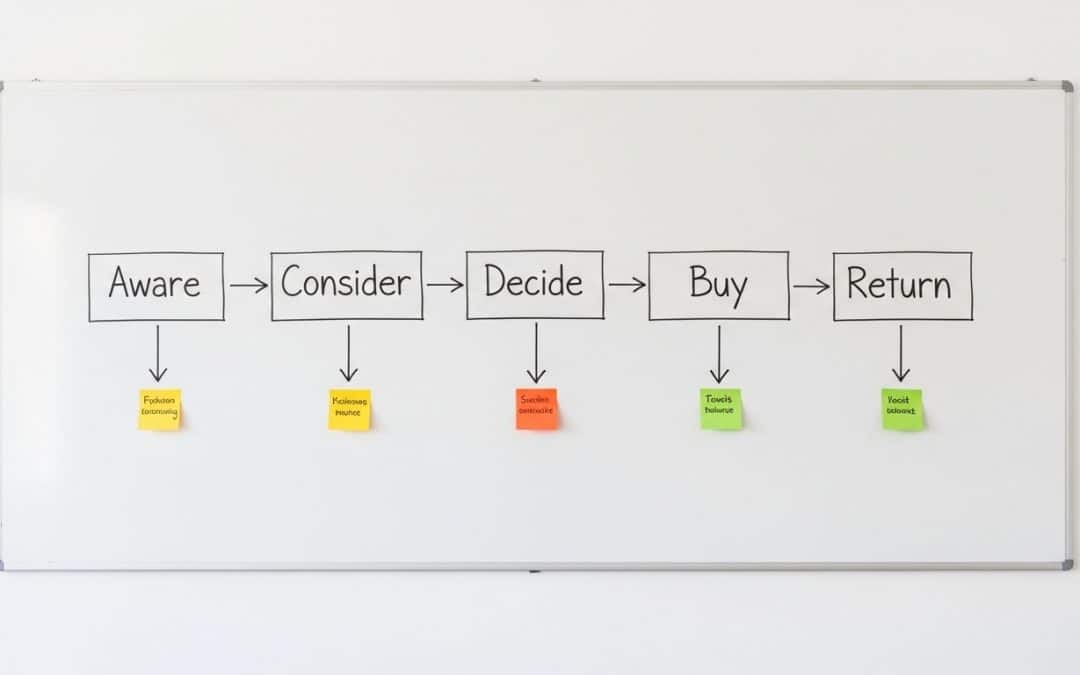
Customer journey in South Africa means the full path a person takes with your business — from first hearing about you, through comparing options and buying, to coming back and recommending you — across Google, WhatsApp, social media, email and your website. It has five stages: awareness, consideration, decision, purchase and retention, and most businesses leak more leads in the middle stages than they realise. This guide explains each stage, how South African buyers behave differently, and gives you a simple map you can fill in today. It sits within our wider guide to digital marketing in South Africa, and it connects directly to channels such as SEO that bring people in at the start.
Quick Answer
A customer journey is every interaction a potential customer has with your business, in order. The five stages are awareness (they discover you), consideration (they compare you), decision (they choose), purchase (they pay or sign) and retention (they come back and refer others). Mapping each stage shows exactly where prospects drop out — which is usually cheaper to fix than buying more traffic.
Not sure which stage is losing you the most leads? We will map your journey and show you the biggest leak — free.
Get a Free Customer Journey AuditThe Five Customer Journey Stages
The five stages of a customer journey — awareness, consideration, decision, purchase and retention — each need different content and different channels, and treating them the same way (for example, showing a hard-sell ad to someone who has never heard of you) wastes budget.
Stage 1: Awareness
Awareness is the moment someone first discovers your business. The main awareness channels for South African businesses are Google search and Maps, social media, word of mouth and directory listings. The job here is not to sell but to be found and make a strong first impression. Businesses that skip awareness end up paying more for every conversion, because too few people already know their name.
Stage 2: Consideration
Consideration is when the prospect compares options — reading reviews, browsing your website, asking friends. Your job is to give them what they need to decide with confidence: clear service pages, examples of your work, transparent pricing and reviews from other South African customers.
Stage 3: Decision
Decision is the moment they choose a provider, and friction is the enemy. A slow website, hidden prices or a reply that takes two days sends a prospect who was ready to buy straight to a competitor. Fast replies — ideally within two hours — and an easy way to book win this stage.
Stage 4: Purchase
Purchase is the transaction: a checkout, a signed quote or a booking. South African buyers look for familiar local payment options, so showing PayFast, Ozow and SnapScan at checkout — and a real local contact number — removes last-minute doubt.
Stage 5: Retention
Retention is where most businesses leave the most money on the table. Keeping a customer costs far less than finding a new one, yet few businesses run any systematic follow-up. Post-purchase emails, WhatsApp check-ins, loyalty offers and referral requests extend the journey past the first sale.
Start simple. A thank-you message within a day of the sale, a review request a week later and a check-in or restock reminder a month later already puts you ahead of most competitors. Ask happy customers directly for a referral — in a market where people trust a friend's WhatsApp recommendation more than an advert, one satisfied customer can be worth more than a month of paid clicks.
Key Takeaway
The customer journey is a loop, not a funnel. A satisfied customer who recommends you in a WhatsApp group restarts the journey for someone new — already half-sold. Businesses that only optimise up to the first sale ignore the cheapest source of new customers they have.
How the Customer Journey in South Africa Differs
The customer journey in South Africa leans more heavily on personal recommendation, WhatsApp and mobile browsing than the UK or US journeys most marketing advice is written for — so international playbooks need local adjustment.
South African buyers often ask a WhatsApp group or a friend before they trust Google reviews alone, which makes the retention and referral stage an unusually powerful awareness engine. Most browsing happens on a phone, frequently on mobile data, so a slow or awkward mobile site loses people at the consideration stage. And trust cues at purchase — local payment logos, a physical address, a South African number — carry more weight than in markets where buyers assume a site is legitimate.
According to McKinsey's consumer decision journey research, the post-purchase experience and loyalty loop drive a large share of revenue for most businesses — a pattern that is even stronger where trust and referral carry as much weight as they do locally.
Want to know which stage is costing you the most leads — and what to fix first?
Book Your Free Journey Mapping SessionA Simple Customer Journey Map You Can Copy
A customer journey map is a one-page table that lists, for each stage, what the customer is trying to do, where they do it, what they need from you and how you will measure it — and filling one in for your business takes about an hour.
| Stage | Customer's question | Main touchpoints | What you provide | What to measure |
|---|---|---|---|---|
| Awareness | "Who can help with this?" | Google, Maps, social, referrals | Helpful content, complete Google Business Profile | Impressions, profile views |
| Consideration | "Are they any good? What does it cost?" | Website, reviews, WhatsApp | Service pages, prices or ranges, reviews, examples | Pages per visit, return visits |
| Decision | "Can I trust them to deliver?" | Contact form, phone, WhatsApp | Fast reply, clear quote, easy booking | Enquiries, reply time, quote-to-close rate |
| Purchase | "Is paying safe and easy?" | Checkout, invoice, contract | Local payment options, simple checkout | Checkout completion, drop-off step |
| Retention | "Was it worth it? Would I use them again?" | Email, WhatsApp, reviews | Follow-up, loyalty offer, review and referral request | Repeat rate, reviews, referrals |
Once the table is filled in, look for the stage where the numbers fall off most sharply — that is your first fix. Speed of reply at the decision stage is the most common leak; our guide to lead response time explains why the first hour matters so much.
Customer Journey Examples for Three Business Types
The same five stages look very different depending on what you sell, so the fastest way to map your own journey is to start from the example closest to your business and adjust it.
| Stage | Local service (e.g. plumber, dentist) | Online store | B2B service (e.g. IT, accounting) |
|---|---|---|---|
| Awareness | "Plumber near me" on Google Maps, a WhatsApp group recommendation | Instagram ad, Google Shopping result | LinkedIn post, Google search for the problem, a referral |
| Consideration | Reviews, photos of work, call-out fee | Product reviews, delivery times, returns policy | Case examples, team credentials, price range |
| Decision | How fast they answer the phone or WhatsApp | Delivery cost at checkout | Quality and speed of the proposal |
| Purchase | Card machine or EFT on site | PayFast, Ozow or card checkout | Signed quote, first invoice |
| Retention | Service reminder, review request | Post-purchase email, restock reminder | Quarterly check-in, referral request |
Notice where each journey is won or lost. For a local service business the decision stage is almost entirely about reply speed. For an online store it is usually delivery cost and checkout trust. For B2B it is the proposal. Mapping the customer journey in South Africa for your own business means finding which of these moments your prospects actually hit — and measuring it.
An Illustrative Example: Where a Journey Leaks
The example below is illustrative — a composite of patterns we regularly see in South African service businesses — and shows how a "traffic problem" is often a journey problem.
Before: a B2B services firm spends R25,000 a month on Google Ads for 8 leads (R3,125 each). Most visitors leave the pricing page without enquiring, and many form enquiries wait more than a day for a reply. The owner's instinct is to raise the ad budget.
After mapping: the firm adds price ranges and three short case examples to the consideration stage, and commits to replying to every enquiry within two hours. On the same ad spend, more visitors enquire and more enquiries turn into quotes — the cost per lead falls without buying a single extra click.
Fix the Journey Before Buying Traffic
If visitors arrive but do not enquire, or enquire but do not buy, more traffic only multiplies the leak. Find the stage where people drop out, fix it, and every Rand of existing marketing works harder.
How to Measure Each Stage of the Journey
Each stage of the journey can be measured with one or two simple numbers from tools most businesses already have, and tracking those numbers monthly shows exactly where people drop out.
| Stage | Useful measure | Where to find it | Warning sign |
|---|---|---|---|
| Awareness | Impressions and new visitors | Search Console, Google Analytics, social insights | Flat or falling month after month |
| Consideration | Pages per visit, time on key service or product pages | Google Analytics | Visitors leave after one page |
| Decision | Enquiries, calls, WhatsApp clicks, add-to-carts | Analytics events, Google Business Profile, call logs | Traffic grows but enquiries do not |
| Purchase | Enquiry-to-sale rate, checkout completion | CRM, store analytics, sales records | Many quotes sent, few accepted |
| Loyalty | Repeat purchase rate, referrals, reviews | Store or CRM data, Google reviews | Customers buy once and disappear |
You do not need all of these on day one. Pick the stage that feels weakest, measure it for a month, make one change, and measure again. Write the numbers in a simple spreadsheet with one row per month so trends are visible at a glance, and note any changes you made alongside them, such as a new landing page, a price change or a faster reply process. That rhythm fixes more leaks than a large mapping workshop followed by no follow-up.
Touchpoints That Are Easy to Overlook
Some of the moments that shape a customer's experience happen outside marketing channels altogether — in invoices, delivery messages, after-hours replies and the way the phone is answered — and they are often where journeys quietly break.
Walk through your own journey as a customer would. Send an enquiry at 8pm on a Friday and see what happens: is there an automatic reply that says when someone will respond, or silence until Monday? Place an order and read every email and SMS that follows — are delivery updates clear, and do they name the courier and a tracking link? Look at your quote or invoice template: does it explain the next step and how to pay, including instant EFT? Call your own number and listen to how it is answered. Each of these touchpoints either builds confidence or creates doubt, and customers rarely complain about them — they simply choose someone else next time.
Illustrative example: a Pretoria accounting firm adds an after-hours WhatsApp auto-reply that confirms receipt and promises a call back by 10am the next working day. Weekend enquiries that previously went cold now convert at almost the same rate as weekday ones, with no extra ad spend.
How Growth Pulse Media Maps Customer Journeys
Growth Pulse Media maps the customer journey in South Africa for service businesses and online stores using real data — Google Analytics 4, Search Console, form and WhatsApp enquiry tracking — rather than a workshop full of assumptions.
We identify the stage losing the most people, fix the specific pages, forms and follow-ups involved, and set up GA4 events so you can see each stage improve. For stores we add PayFast and Ozow checkout tracking and Klaviyo or Omnisend post-purchase flows; for service businesses we focus on reply speed and digital strategy across channels. All work is done in-house from Johannesburg.
Who This Is NOT For
Mapping the customer journey in South Africa is useful for most businesses, but it is the wrong next step in four situations.
You have almost no traffic or enquiries yet: with too few people moving through, there is nothing to measure. Build awareness first.
You want a pretty diagram, not changes: a journey map only pays off when the leaking stage is actually fixed.
Nobody can reply to enquiries faster: if the decision-stage leak is reply speed and no one can take ownership of it, the map will only confirm the problem.
The product itself is the problem: if customers do not come back because the product disappoints, no journey work will fix retention.
Ready to see your own journey stage by stage — with the numbers attached?
Get Your Free Journey MapFrequently Asked Questions
What is a customer journey?
A customer journey is the full sequence of interactions a person has with a business, from first discovering it to buying and returning. It usually has five stages: awareness, consideration, decision, purchase and retention.
What is the difference between a customer journey and a sales funnel?
A sales funnel runs one way, from awareness to purchase. A customer journey continues after the sale and loops back, because satisfied customers return and refer others — which makes retention part of how new customers arrive.
How do you create a customer journey map?
List the five stages, and for each one write down the customer's question, the touchpoints they use, what you provide and the number you will measure. Then find the stage where people drop out most and fix that first.
Why is the customer journey different in South Africa?
South African buyers rely heavily on personal and WhatsApp recommendations, browse mostly on phones and look for local trust cues such as PayFast or Ozow at checkout. Journeys built on UK or US assumptions often miss these steps.
Which stage of the customer journey matters most?
The stage where your prospects drop out most — very often the decision stage, where slow replies and unclear pricing send ready buyers to a competitor. Retention matters next, because repeat customers and referrals are the cheapest growth available.
How long does it take to map a customer journey?
A first version takes about an hour for a small business: list the five stages, fill in the questions, touchpoints and measures, and mark the stage with the biggest drop-off. Adding proper tracking in Google Analytics 4 so each stage can be measured usually takes a few days.
How do you measure the customer journey?
Measure one or two numbers per stage: new visitors for awareness, pages per visit for consideration, enquiries for decision, enquiry-to-sale rate for purchase, and repeat purchases or reviews for loyalty. Track them monthly and fix the stage where the biggest drop happens first.
Find Out Where Your Leads Are Leaking
Growth Pulse Media maps and fixes customer journeys for South African businesses — GA4 stage tracking, WhatsApp and form reply systems, PayFast and Ozow checkout improvements and Klaviyo or Omnisend retention flows. We will show you the leaking stage and the first fix. No obligation — we will get back to you within 24 hours.
Get Your Free Journey Consultation